A light is on
That does not mean the reading area is bright enough.
Illuminance depends on position, direction, daylight, surfaces, and the person using the space.
An open proposal for homes that can outlast their technology
What must an Agent know to truly understand a home?
This is an early public discussion, not a finished standard or product.
Motion detected is an observation. Who moved—and whether the home should act—still needs evidence, permission, and verification.
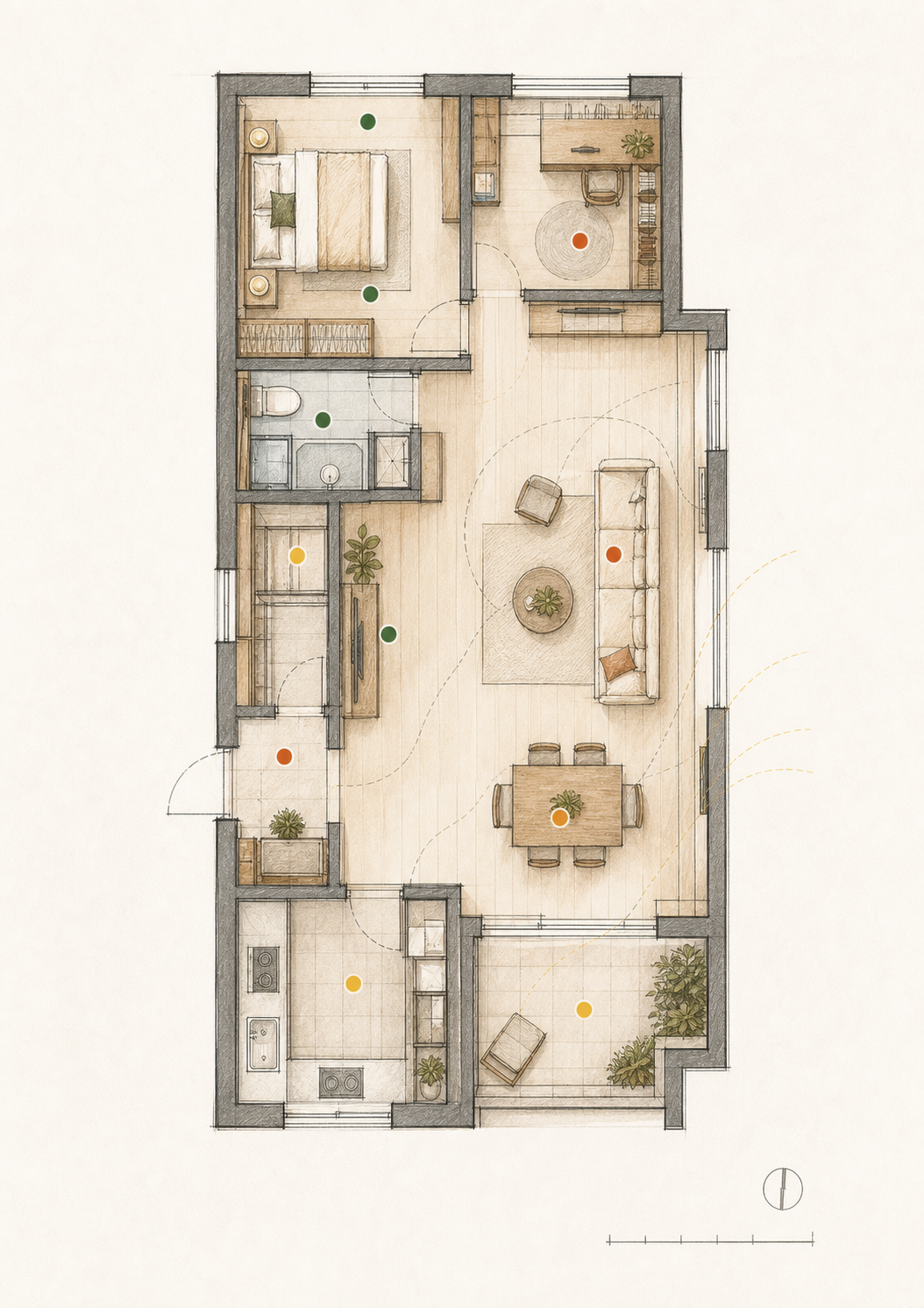
The gap is concrete
Today’s systems can report states and execute commands. They rarely know what those states mean inside a particular home.
That does not mean the reading area is bright enough.
Illuminance depends on position, direction, daylight, surfaces, and the person using the space.
That does not identify a family member, visitor, or pet.
A signal is an observation. Identity, intent, and the right response require separate evidence.
That does not reveal today’s life stage or actual need.
A habit can inform a decision, but it must not silently become a command.
That does not mean it knows the physical effect.
The action matters only if the home reaches the intended result and can verify it safely.
A discussion framework, not a frozen architecture
The proposal starts with six connected ways of knowing. Each can remain incomplete, uncertain, and open to correction.
Rooms, openings, furniture, functional zones, distance, direction, and obstruction.
Where a device is installed and how light, heat, air, sound, energy, or signal moves.
Family members, pets, visitors, roles, states, preferences, and action boundaries.
Moments, life stages, habits, exceptions, and events that may be about to happen.
Observation, identification, fact, inference, and prediction kept visibly distinct.
Design intent, construction reality, commissioning, operation, change, and repair.
A responsible Agent knows what it does not know
Illustrative sequence · every layer remains open to correction
A hallway sensor reports movement.
The source might be a family member, visitor, or pet.
Someone may be passing through rather than staying.
Low, non-glare light may be useful next.
Is proactive lighting allowed here, now, and for this person?
Act at low cost, verify the effect, explain it, and allow correction.
Open by ownership, not only by source code
The proposal should map to and collaborate with Matter, KNX, Home Assistant, BIM, Brick, W3C WoT, and other existing work—not replace it.
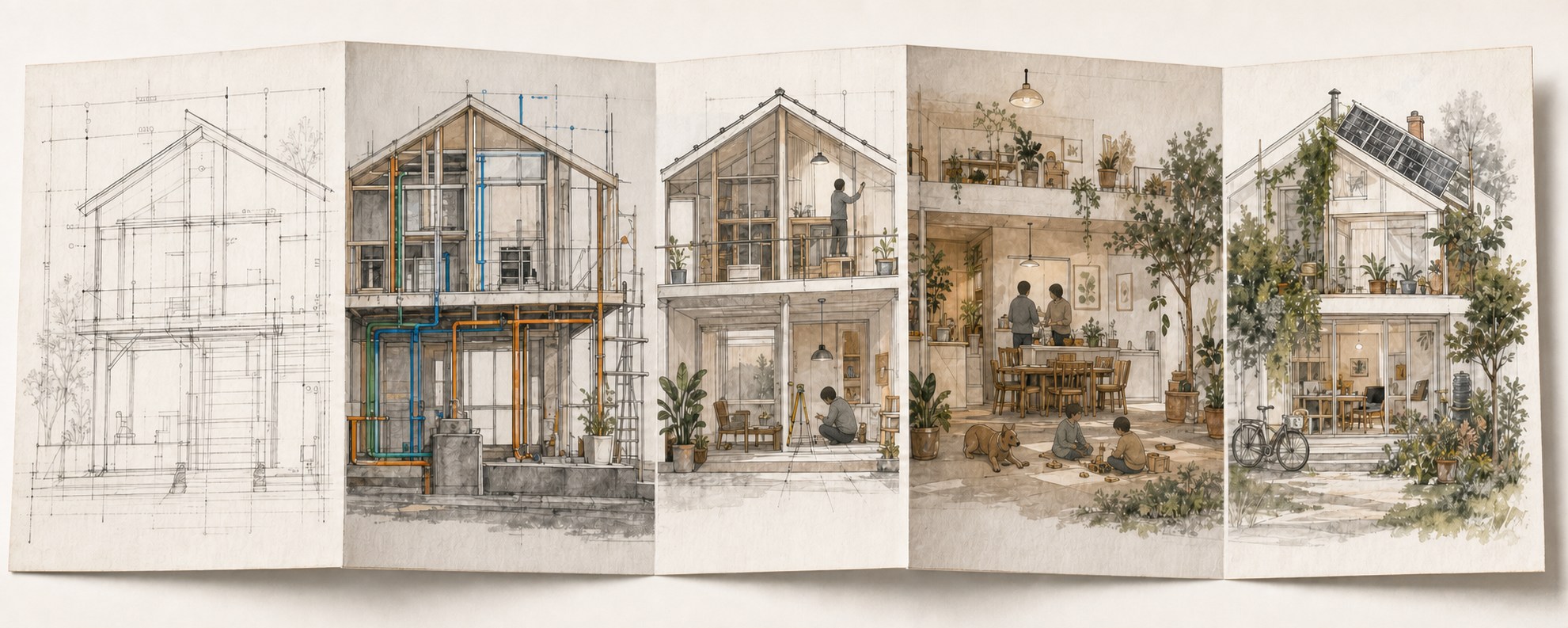
One home, one continuous record
A home begins forming before anyone moves in. Design assumptions, site changes, measurements, and later corrections should contribute to the same household-owned understanding.
You do not need to write code
Contribute a household story, professional constraint, mapping to existing standards, or a reason this proposal is wrong. Disagreement is useful evidence.
Read the complete narrative